When our application specialists are on your floor, this is what they're reaching for. The newest Tungaloy NTK technology — high-performance turning, high-feed milling, and drilling — applied to the materials and parts that decide whether a job runs profitably. (For aerospace heat-resistant alloys, see the ceramic and BIDEMICS lineup above.)
A single indexable tool turns front, back, profile, and face — no tool changes, no extra stations. New low-force chipbreakers and high-feed back-turning pull time out of the operation while keeping the edge in the cut longer, and six corners per insert keep cost-per-part honest.
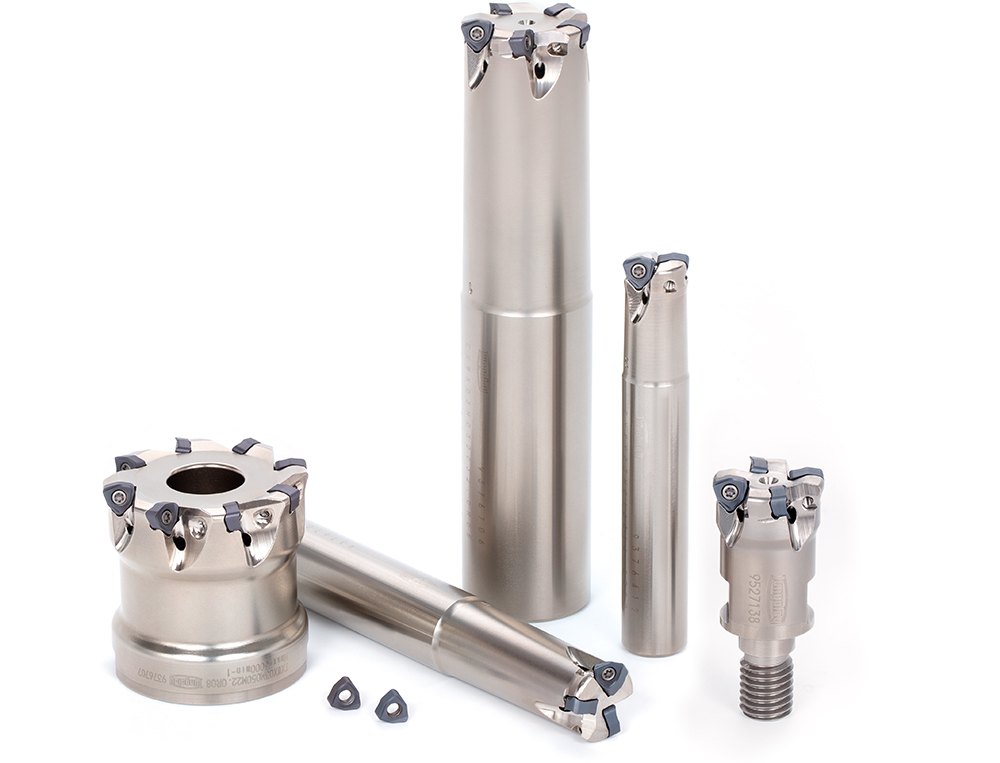
High-feed milling takes a light axial depth and runs it at aggressive feed per tooth. The low lead angle drives cutting force up into the spindle, so the setup stays stable while metal comes off fast — built for roughing pockets, faces, and dies. DoFeedTri's double-sided inserts carry six cutting edges, so the speed doesn't come with a cost-per-edge penalty.
DrillMeister head-changeable drillingSwap the carbide head in-machine — no offsets, no regrinding

DrillMeister's self-locking carbide head swaps right on the machine — no pulling the body, no re-touching offsets — so you drill instead of regrind, holding solid-carbide hole tolerances from ø4–25.9 mm. Backed by Tungaloy NTK grades built for stainless and difficult-to-cut materials.
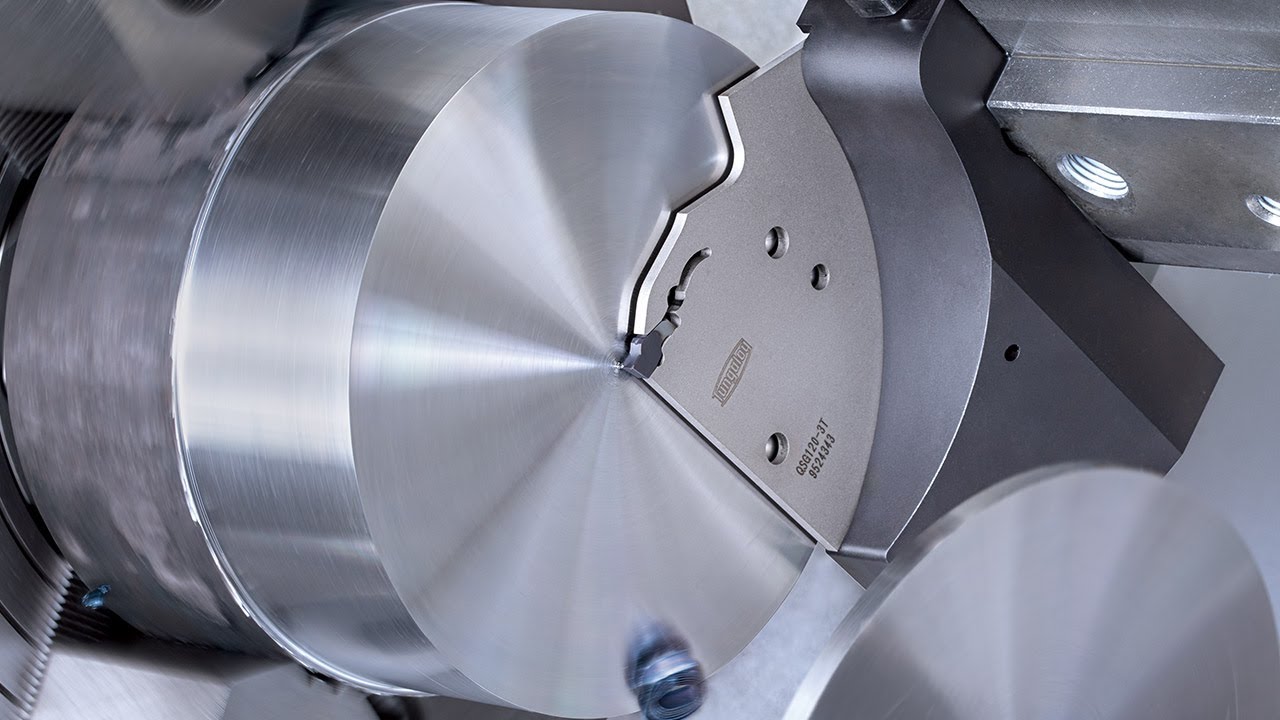
AddForceCut deep grooving & partingSelf-clamping single-ended insert — deeper, more stable cutoff
Deep grooving and parting punish a weak insert seat — the edge deflects, chips pack the slot, and cutoff walks off size. AddForceCut locks a single-ended insert into a self-clamping seat with three contact faces and a stopper, so it holds position through deep, interrupted cuts and evacuates chips cleanly. A single-ended edge reaches deeper and parts larger bar — up to 120 mm (4.72″) — without a second edge fouling the workpiece.
Gabby finds the right Tungaloy NTK tool. We get it priced, check stock, and put it on your floor — usually same day. Find the tool, then drop the designation here and it lands in our inbox.
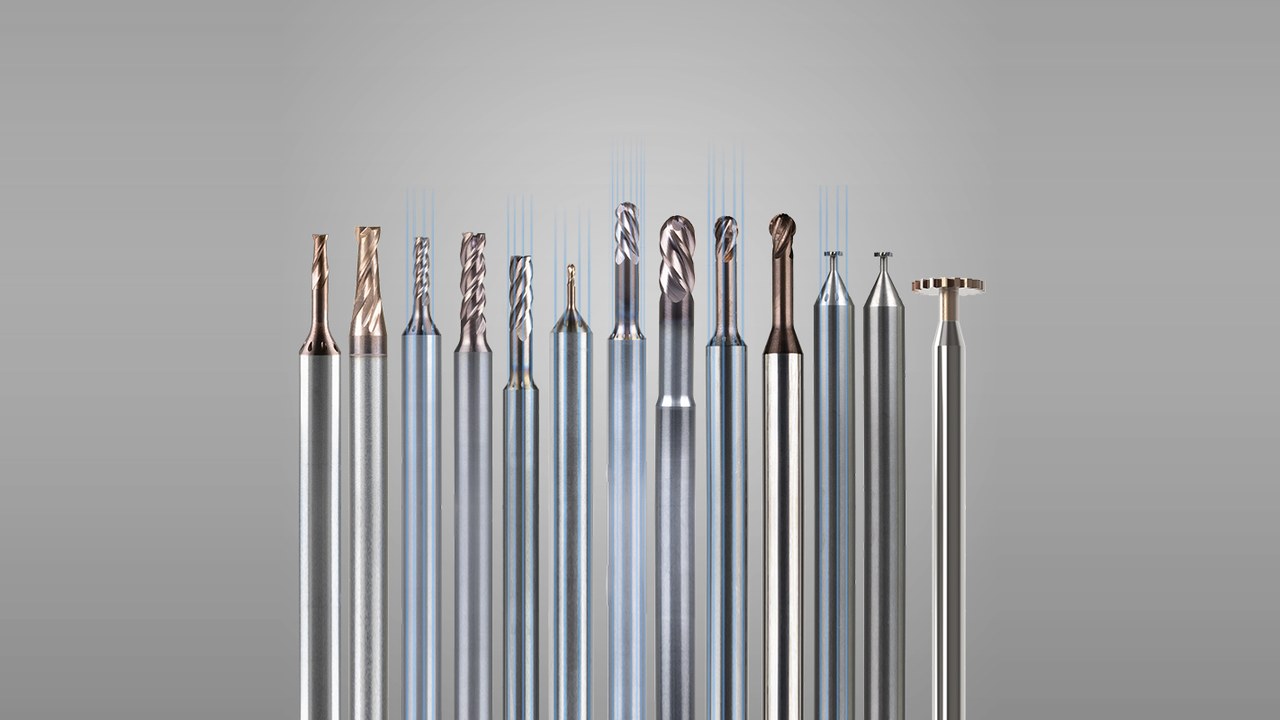
A general-purpose end mill scaled down to 1 mm is still a general-purpose end mill. It does not survive cobalt-chrome. HB microtec builds the whole range the other way round: rotationally symmetrical tools from 0.1 to 8 mm, with substrate, geometry and coating matched to hard, heat-resistant and abrasive materials from the start. That is the entire business, not a corner of a catalogue.
Cobalt-chrome, nickel and titanium alloys — the materials behind medical implants, aerospace structure and mould work. HPC, HSC, plunge, ramp and trochoidal milling, plus 3D profiling, roughing and finishing. The INOX-CORD, HPC, Finish and Trochoid mills all run internal coolant, which is what keeps a small tool alive in titanium.
Ramp to 70°, cut a full groove, and plunge vertically at 90° like a drill — with the same tool, at high cutting values and depths. The saving is not the tool cost. It is the tool changes, the extra pocket in the carousel, and the setup sheet that no longer needs two lines where it used to need one each way.
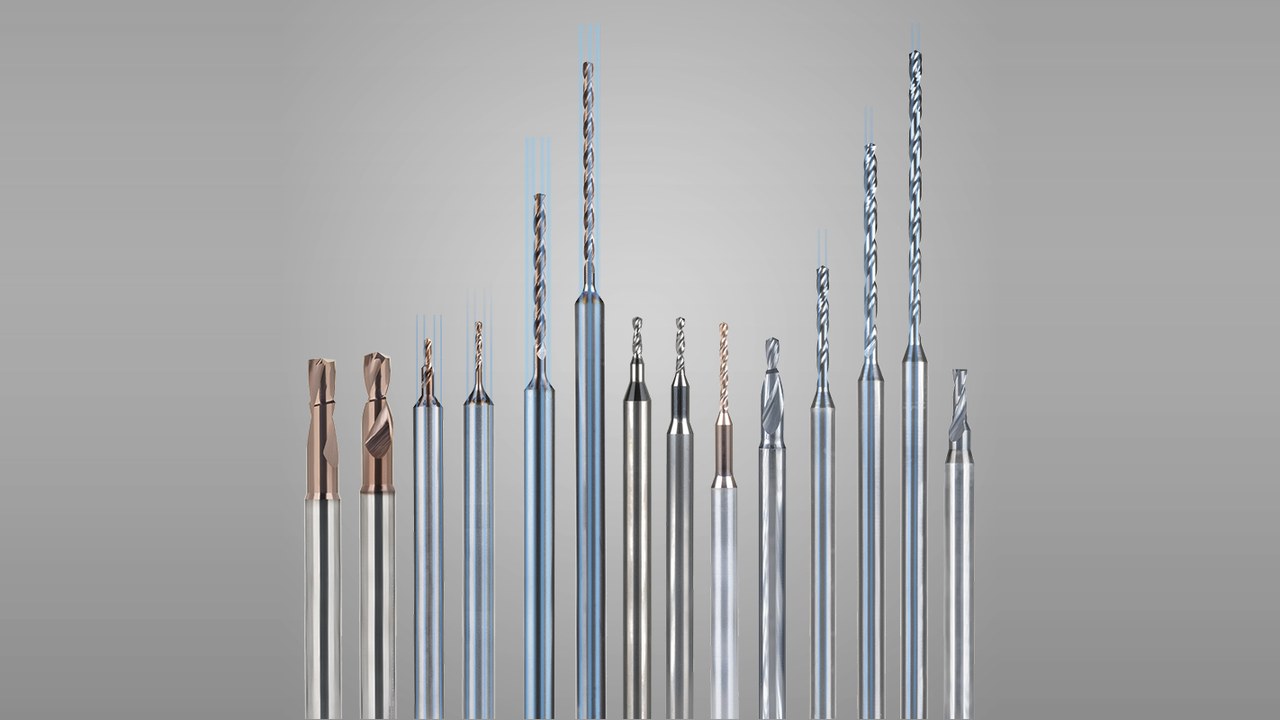
Centering, chamfering, drilling, reaming and countersinking from 0.1 mm up, with through-tool coolant on the deep-hole range. Below about a millimetre the drill stops being a consumable and starts being the process — runout, chip evacuation and coating decide whether the hole is round and whether the tool survives the second one.
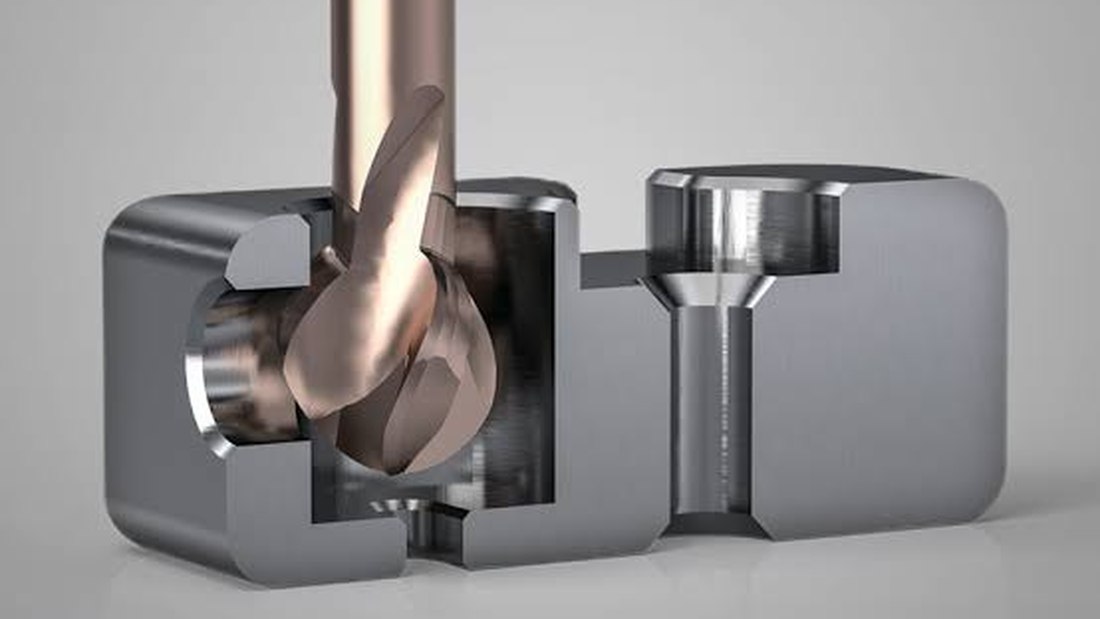
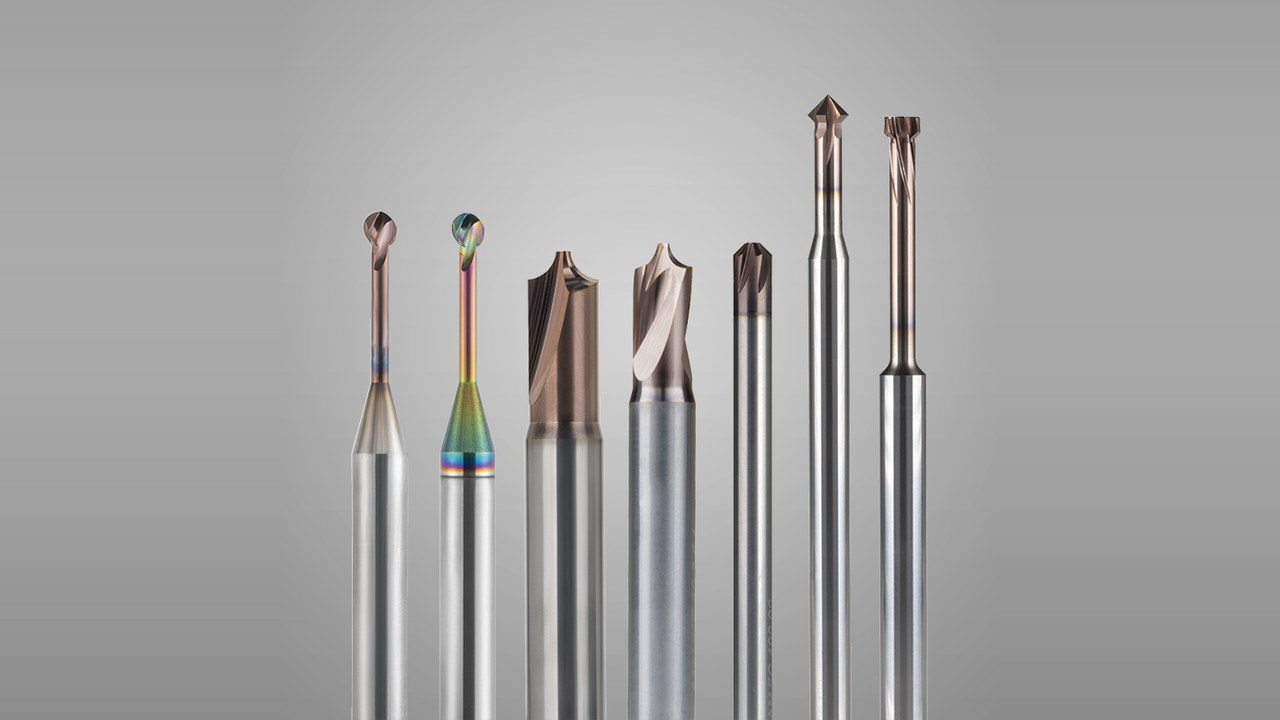
Three-flute 305° ball end mills from 0.8 to 10 mm on a long, stable neck reach front and rear burrs, internal and external contours, bore intersections and angled hole exits in the same setup. T-Slot cutters and custom-ground deburring forms round out the range, with diameter, length, shape and flute count matched to the part.
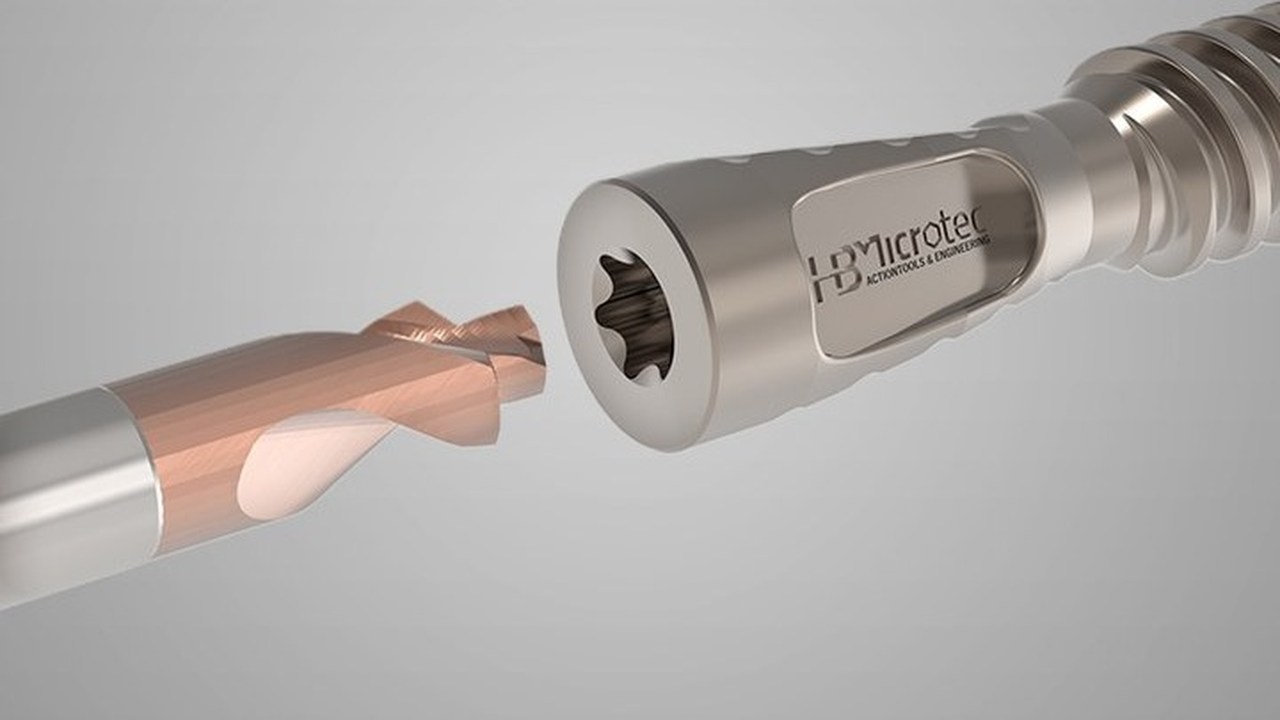
Surgical and dental screws use a six-lobe star socket because it carries far more torque than a hex of the same diameter — which matters when the screw is 1.5 mm across and the surgeon only gets one attempt. Cutting that profile small has always been slow and expensive. HB microtec builds dedicated tooling for it, so the socket comes from one operation instead of a broach, a second setup and a scrap rate.
Three operations normally means three tools, three changes and three chances to be out of position. The TARGETDRILL thread-drill-mill drills the core hole with its point, mills the thread helically, and chamfers the lead-in with its step shoulder — in one sequence. The point also cuts an extended thread undercut at the bottom of the hole, which is usually a fourth operation.
Core-hole drills cover metric M1 to M8 and imperial UNC, UNF and UNEF. HB microtec also carries WhizCut micro thread mills — single-flute from M0.5, plus UNC, UNF and BSPT, NPT and NPTF pipe threads.
If the part is small, the material is hard, and tool life is the thing deciding whether the job is profitable, this is the range to look at. Send us the part and the material and we will tell you which tool fits — or that a different line suits it better.
Fighting stockouts, chasing cycle time, tired of a 1-800 catalog, or sizing up new machine capacity? Start a conversation with the independent team that handles all of it.
We'll be in touch within one business day.
Call us directly: 978·356·2500